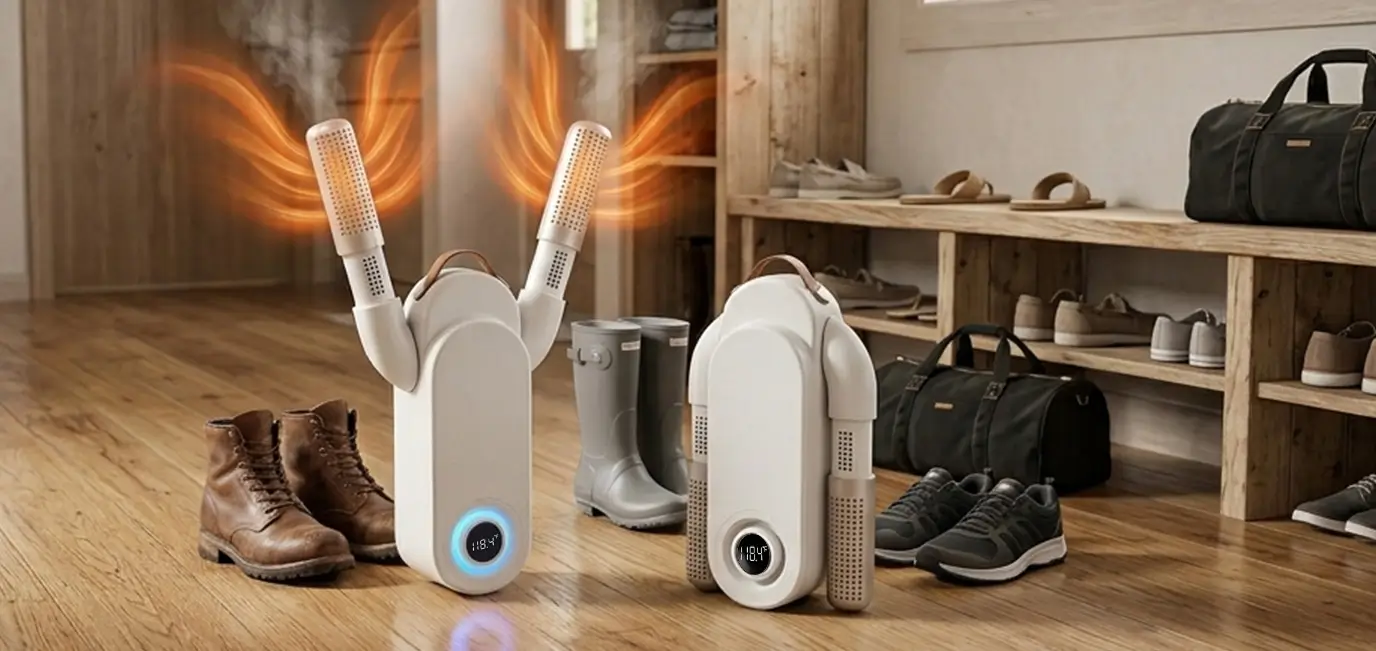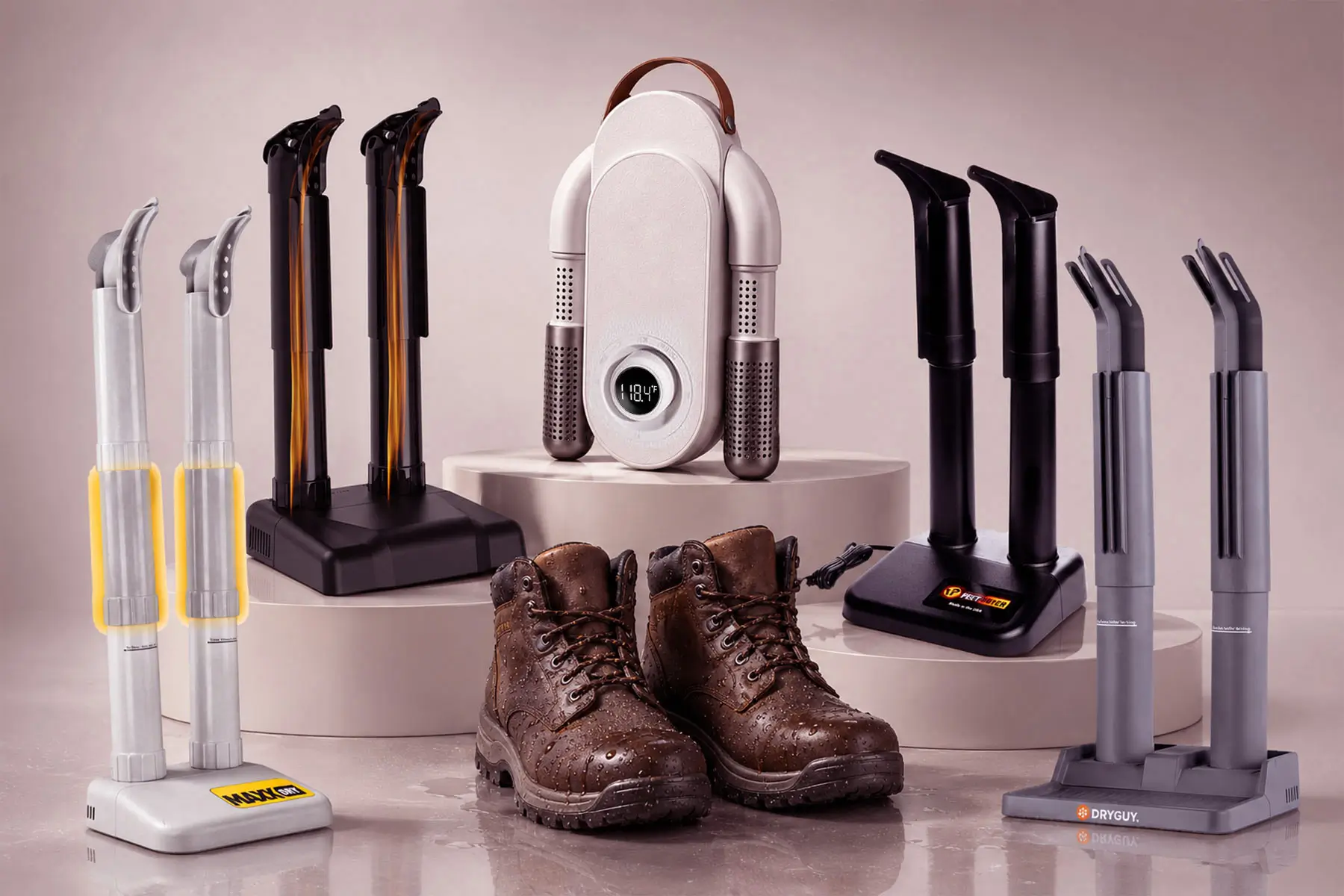
Let's be brutally honest. You already know the routine. Boots by the door, newspaper stuffed in the toes, maybe a spot on the radiator or over a floor vent. And tomorrow at 5:45 AM, you push your foot into a boot that is still damp, already cold, and starting to smell like something died in it. If it's not you, it's someone in your house: the work boots banished to the garage, the hockey bag riding home with the windows down.
Here's the part nobody tells you: the smell is not a cleaning problem. It's a moisture problem. Odor-causing bacteria feed on the sweat trapped inside your footwear and multiply fastest in exactly the environment a damp boot provides overnight [1][2]. Spray and baking-soda all you want; as long as the boot stays wet inside, the smell comes back. And wet boots don't just stink: moisture breaks down leather and glue, and damp skin blisters faster on a long shift [3].
That's why boot dryers exist. And that's why searches for them explode every winter.
Boot dryers used to be a niche gadget for ski bums and mail carriers. Not anymore. Between tradespeople working outdoors year-round, the boom in youth hockey and winter sports, and a general awakening that "just let them air dry" takes two full days, the category has quietly become one of the most-reviewed home gear segments on the internet. The two oldest brands in the space have racked up more than 26,000 Amazon reviews between them.
But here's what we found when we actually tested the field: most boot dryers on the market are built on 30-year-old technology, and most buyers are choosing between two bad trade-offs without knowing it.
Foot odor has been studied more seriously than you'd expect. Researchers isolated the mechanism decades ago: bacteria living on the skin and inside footwear metabolize sweat components and dead skin, producing isovaleric acid, the compound responsible for the classic "locker room" smell [1]. A comparative study of people with low-odor and high-odor feet found the difference came down to bacterial population density, which tracks directly with moisture [2].
Translation: dry the boot completely, every night, and you remove the conditions the odor factory needs. Leave the boot damp at the toe box, and no spray on earth will save you.

Heat matters too, in both directions. Warmth speeds evaporation dramatically, which is why a heated dryer beats a fan. But footwear materials have limits: adhesives, leather, and custom-molded ski liners all suffer above certain temperatures. The sweet spot the industry has converged on is gentle heat in the 118.4°F range: warm enough to dry overnight or faster, cool enough to be safe for leather, rubber, neoprene, and synthetics.
Finally, there's ultraviolet light. Germicidal UV has a long track record as a surface treatment in professional settings [4], which is why standalone "UV shoe sanitizer" gadgets have become a category of their own. The problem? A UV box that doesn't dry your shoes is treating the symptom while feeding the cause. The logical move, which only the newest generation of dryers has made, is combining drying and UV freshness assistance in a single machine.
The problem? Most brands haven't made that move. As we tested the market leaders, a pattern emerged:
Heritage brands are stuck in The Overnight Gamble. The most-recommended dryers in America still use the same passive convection design they shipped in the 1990s: no timer, no modes, freshness tech sold separately as replacement parts, and an overnight wait built into the instructions.
Speed brands are stuck in The Blast-Heat Trade-Off. The forced-air players solved slowness and created a noise machine, with heat delivery that owners on every gear forum treat with suspicion.
Nearly everyone is stuck in The Dry-Only Dead End. Across the legacy field, we found exactly zero flagship units under $100 that combine controlled gentle heat, a timer, multiple gear modes, and built-in UV freshness assistance.
Zero, that is, until this year.
After weeks of testing, we scored every unit against the three pillars that separate a dryer you'll use every night from a dryer that ends up in a closet:
 Pillar 1: Complete Drying Power
Does it dry deep inside the toe box, not just the shaft? Does it offer real speed (an hour for damp gear, overnight certainty for soaked) with a timer so you're not babysitting it? Can it handle more than one kind of gear: boots, shoes, gloves, liners?
Pillar 2: Material-Safe Heat Control
Is the heat regulated to a fixed, leather-safe temperature? Is there an auto shut-off? Is it quiet enough to run overnight near living space? This is the pillar that protects your $300 boots and your $600 ski liners.
Pillar 3: Odor & Freshness Technology
Does the machine go beyond moisture removal with UV or other freshness assistance that helps reduce odor-causing bacteria? Are there modes tuned for different gear and moisture levels, or is it one-speed-fits-all?
Separate from the design traps above, a few red flags showed up repeatedly in our research:
 The $20 no-name special
Amazon is full of generic dryers with impressive thumbnails and one-winter lifespans. The money-wasted stories in owner forums cluster almost entirely here. A dryer you buy twice is not cheap.
"Buy the rest separately" pricing
Several legacy brands sell the dryer, then sell the extensions for tall boots, the glove attachments, and the odor modules as separate line items. Price the full system before comparing.
No warranty, no guarantee
The good brands stand behind their units. If you can't find a money-back window and a warranty period stated plainly, keep scrolling.
Wobbly builds
The most common complaint thread on the best-selling budget dryer is structural: bases that loosen, posts that lean. Your dryer holds several pounds of wet boots every single night. Build quality is not optional.
Our team rigorously tested the main boot dryers available in 2026. Each product was evaluated under strict criteria, considering Complete Drying Power, Material-Safe Heat Control, and Odor & Freshness Technology. We ran identical soak tests (work boots, running shoes, and winter gloves), measured dry-down overnight, and logged noise, stability, and ease of use across multiple weeks. While TrustedConsumersReviews shares a parent entity with some reviewed brands (e.g., Lumivyx), we remain committed to honest comparisons that put product performance and consumer value first.
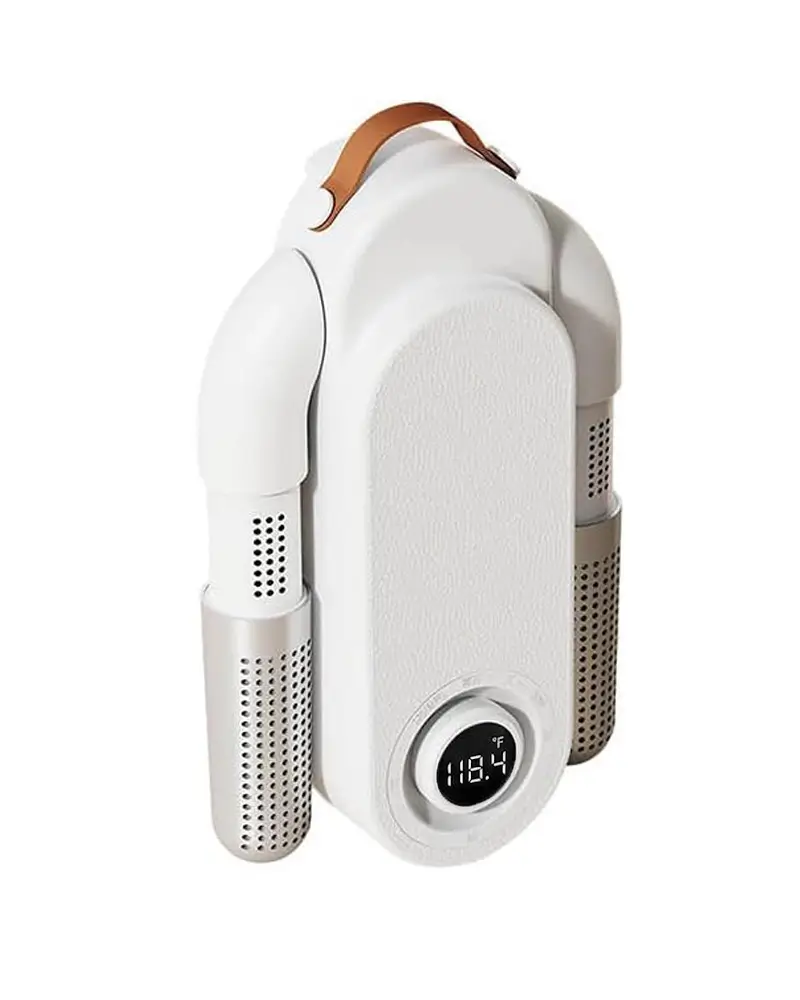
TOTAL RANKING: A+
OVERALL GRADE:
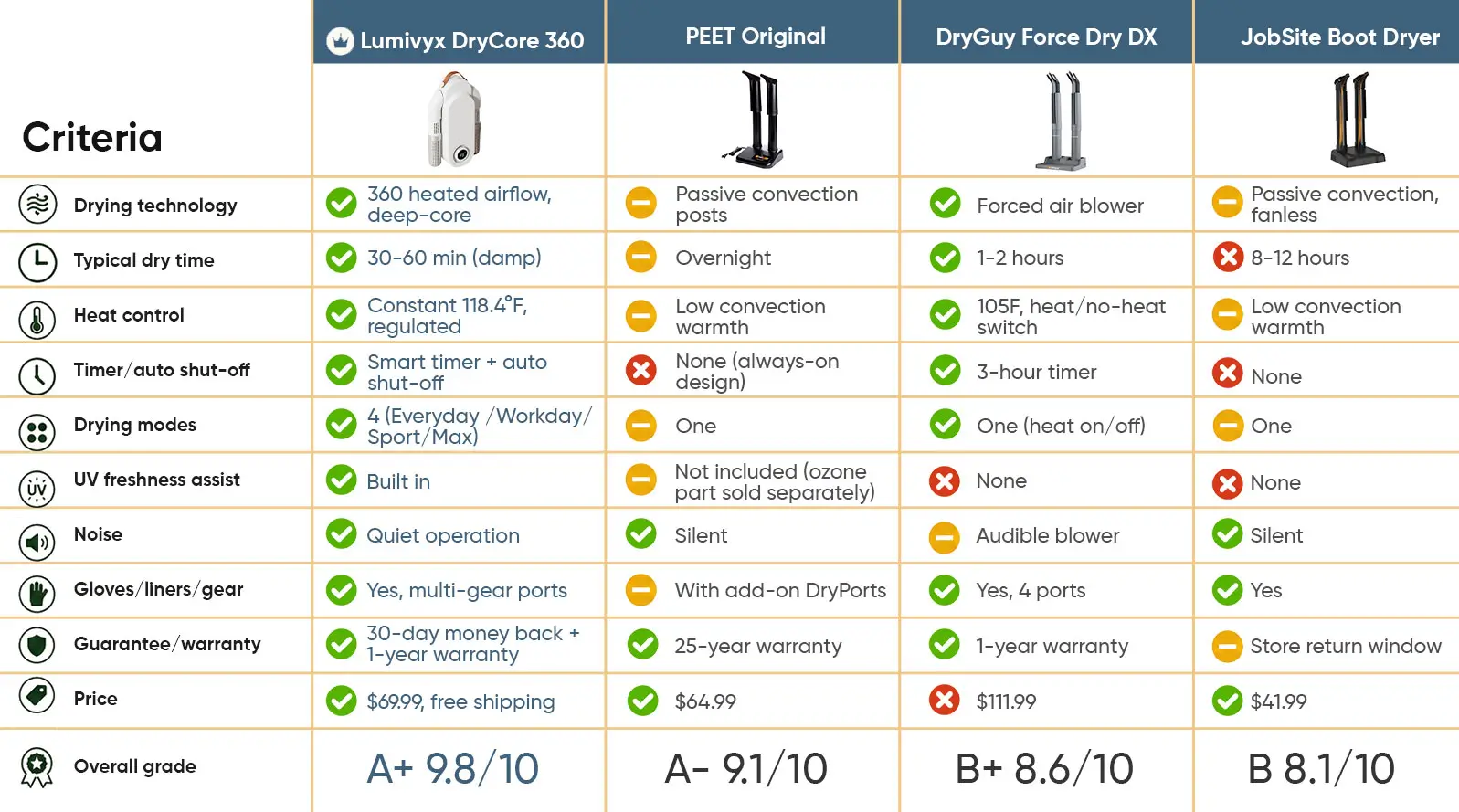
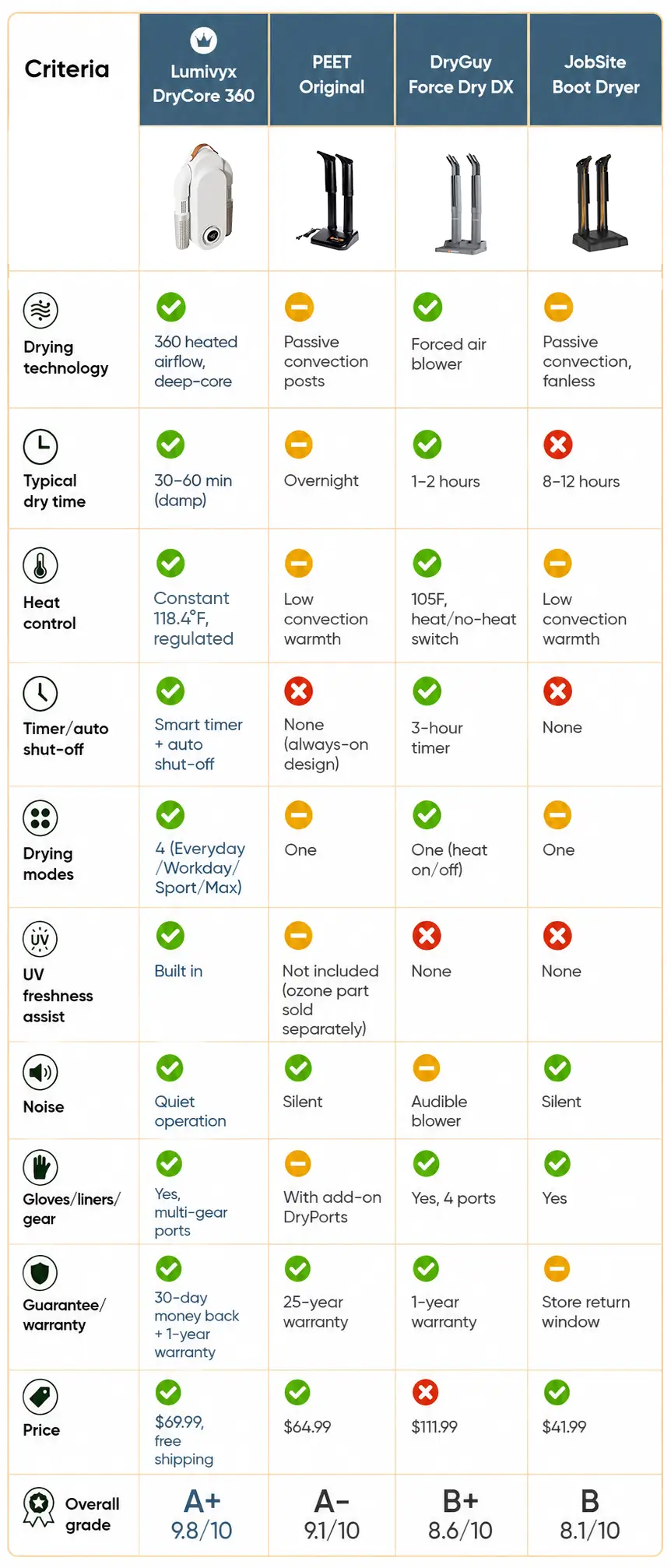
The DryCore 360 is the only dryer we tested that refuses the category's defining trade-off. It is fast without being loud, warm without being risky, and it is the only unit in its price class that treats freshness as a built-in job rather than an accessory.
 Dries deep, not just around: The 360-degree heated airflow
pushes gently warmed air down into the toe box and padding where
moisture actually hides. In our soak tests, damp work boots came off the
ports fully dry inside in under an hour; fully soaked boots were dry and
warm by morning.
118.4°F constant heat, leather-safe by design:
The heating element is regulated to a fixed 118.4°F: warm enough to dry
overnight-soaked leather, regulated so it cannot creep into the range
that cracks leather and warps liners. This is the answer to every
radiator horror story ever posted on a boot forum.
Four real modes plus a smart timer: Everyday, Workday, Sport,
and Max settings match drying intensity to the gear and the soaking. Set
it, walk away, and the auto shut-off handles the rest. No other unit
under $100 offers mode-based drying at all.
Built-in UV freshness assist: with
Alongside the drying cycle, integrated UV light helps reduce
odor-causing bacteria inside the footwear: the one-two punch (remove the
moisture, then assist freshness) that standalone UV boxes and dry-only
machines each deliver only half of.
One machine for the whole wet pile:
Multi-gear ports handle boots, shoes, gloves, and liners. In a house
with a tradesman, a skier, or a hockey kid, that's the difference
between a gadget and a fixture.
Premium over budget posts: At $69.99 it costs more than a
bare-bones convection dryer. If all you need is a slow warm post and you
never forget to use it, the budget tier exists for a reason.
Winter inventory pressure:
This category sells out in season: demand for boot dryers roughly
sextuples in December. The DryCore 360 is a newer entrant without a
big-box supply chain behind it, and multi-pack tiers in particular have
limited stock heading into Q4.
No 25-year heritage badge:
Lumivyx backs the unit with a 30-day money-back guarantee and a 1-year
warranty, but it cannot match the multi-decade warranty of the oldest
brand in the category. What it offers instead is a full money-back
window rather than a repair-only promise.
The DryCore 360 is the only dryer we tested that clears all three pillars: complete drying power (deep 360 airflow, 30-60 minute damp cycles, four modes), material-safe heat control (fixed 118.4°F, smart timer, quiet enough for a bedroom wall), and genuine odor and freshness technology (built-in UV assist). The heritage brands beat it on nostalgia and the speed brands tie it on raw pace, but no other unit combines all three pillars at any price we could find, let alone under $79. For anyone who puts on damp boots more than once a month, this is the one we'd buy first.
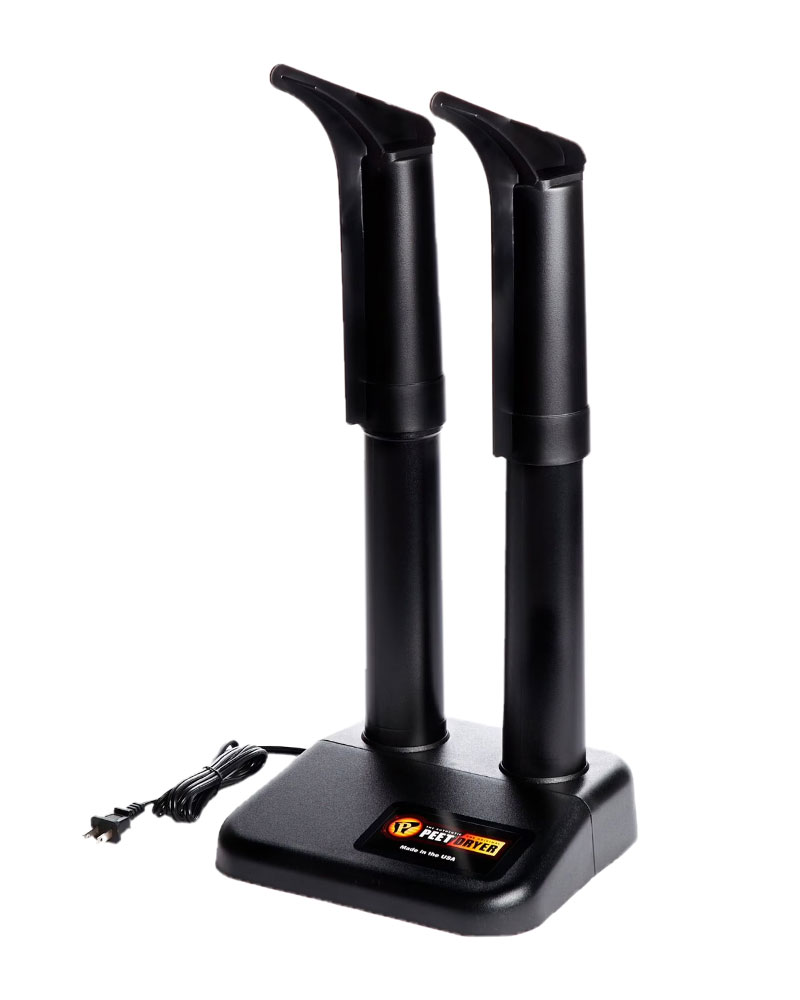
TOTAL RANKING
OVERALL GRADE
The dryer your grandfather owned, quite possibly literally. PEET has been making convection dryers in the USA for decades, and the Original remains the default recommendation on every forum for a reason.
Legendary reliability:
The no-moving-parts convection design has almost nothing to break, and
PEET backs it with a 25-year warranty, the longest in the category by an
order of magnitude.
Completely silent, pennies to run:
With no fan, the Original makes zero noise and draws just 36 watts.
PEET's own guidance is to leave it plugged in 24/7.
Safe on every material:
Decades of use on leather, rubber, neoprene, canvas, and synthetics with
an excellent track record. The gentle warmth will not hurt your boots.
Made in the USA:
For buyers who weight domestic manufacturing, PEET is the only major
player that offers it.
The Overnight Gamble, embodied: Convection means overnight
drying, full stop. Forget to rack your boots the moment you get home and
they will not be ready. There is no timer, no modes, and no speed option
on the base unit.
Freshness tech sold separately: The base dryer does nothing
about odor beyond drying itself. PEET sells ozone emitters and specialty
ports as separate purchases, which pushes the real system price well
past the sticker.
Tall boots need add-ons: Western and tall work boots require
extension accessories, another separate line item.
PEET wins on trust and loses on time. It is a genuinely excellent implementation of 1990s technology, and if you are a one-pair, every-single-night, plan-ahead person, it will serve you for decades. But it misses Pillar 3 entirely: there is no odor or freshness technology on the unit, and the overnight-only pace means Pillar 1 is a coin flip on busy nights. The best heritage buy, not the best dryer.
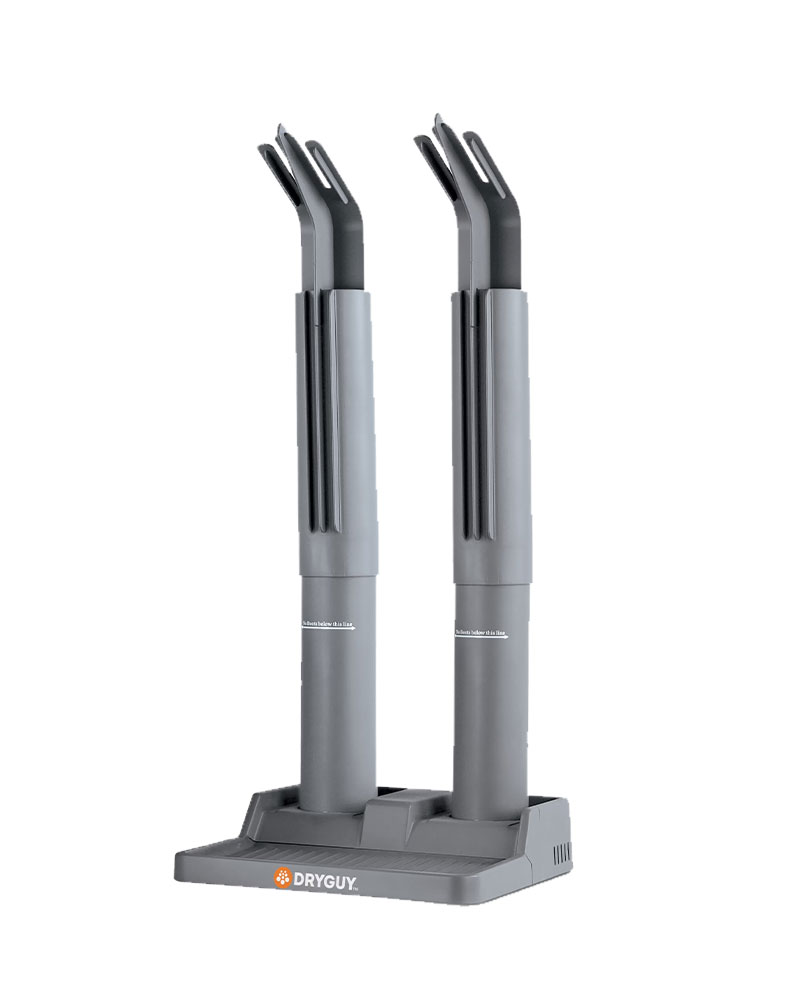
TOTAL RANKING
OVERALL GRADE
The speed king. DryGuy's flagship forced-air unit dries two pairs of boots or gloves in 1-2 hours, and for pure pace it beat everything else we tested.
Genuinely fast:
Rain-soaked boots dry in 1-2 hours with the blower running. Nothing else
in the legacy field comes close.
Four ports plus a real timer:
Dries two pairs at once (or boots plus gloves), with removable 16-inch
extension tubes for tall boots and a 3-hour timer.
Heat or no-heat switch: The no-heat option is a smart touch for
delicate custom liners, drying with airflow alone.
You will hear it: The rotary blower is the trade-off for the
speed. Running it for two hours in a mudroom next to a living room, or
overnight in a shared condo, is a real quality-of-life cost the
convection crowd never pays.
The heat question: Forced hot air at 105F is safe when
everything works as designed, but this is the design owners on gear
forums are most cautious with around expensive molded liners. A 1-year
warranty does not add confidence next to PEET's 25.
Dry-only, at a premium price: At $111.99 it is the most
expensive unit we tested, and there is no UV or freshness technology of
any kind on board.
The Force Dry DX aces Pillar 1 and pays for it on Pillar 2: the noise and blast-heat approach are exactly the trade-off the newest generation of regulated-heat dryers was built to eliminate. If you routinely need two pairs of soaked boots ready in two hours and you can park the unit in a garage where the noise doesn't matter, it earns its keep. As an every-night household machine at $111.99, it's a harder sell.
Available at: dryguy.com and Amazon.
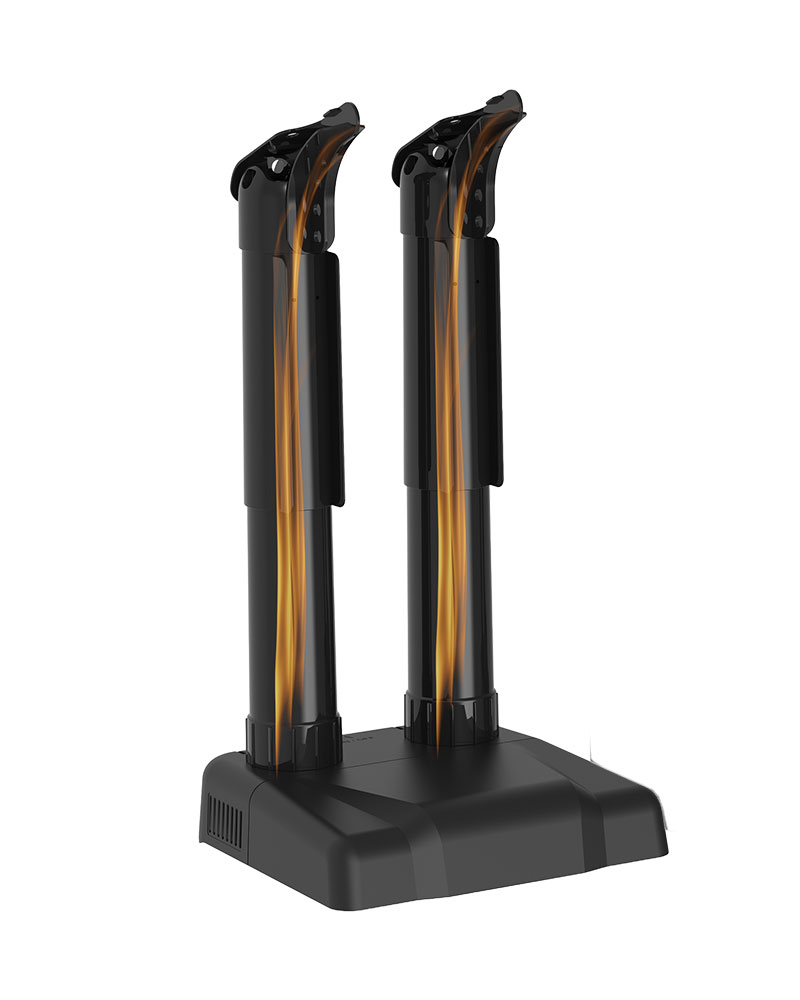
TOTAL RANKING
OVERALL GRADE
The Amazon value king: a fanless 36-watt convection dryer with more than 10,000 reviews and a price that makes it the most popular first dryer in America.
The price:
At $41.99 it is the cheapest name-brand dryer that actually works, and
its "warm boots every morning" promise is real if your routine is
consistent.
Dead silent:
No fan, no motor, no moving parts. Nothing to hear and very little to
break.
Safe for leather:
The gentle rising heat is easy on work boot leather, rubber, and
synthetics.
The slowest unit we tested: The manufacturer's own dry times are
8 hours for damp and 12 hours for wet footwear. That is not overnight
certainty; that is overnight-if-everything-goes-right.
Build quality complaints are the category's worst-kept secret:
Amazon's own review summary flags sturdiness as the leading complaint, with a long thread of loose bases and leaning posts. More than a hundred reviewers say some version of the same thing.
No timer, no modes, no freshness tech: It is two warm posts.
Everything else on this list does more.
JobSite is the right answer to the question "what is the least I can spend on a real dryer," and the wrong answer to almost every other question. It misses Pillar 1 on speed and capability, and the recurring sturdiness complaints undercut the one thing a budget product must deliver: not needing to be replaced. A fine starter dryer; not an endgame.
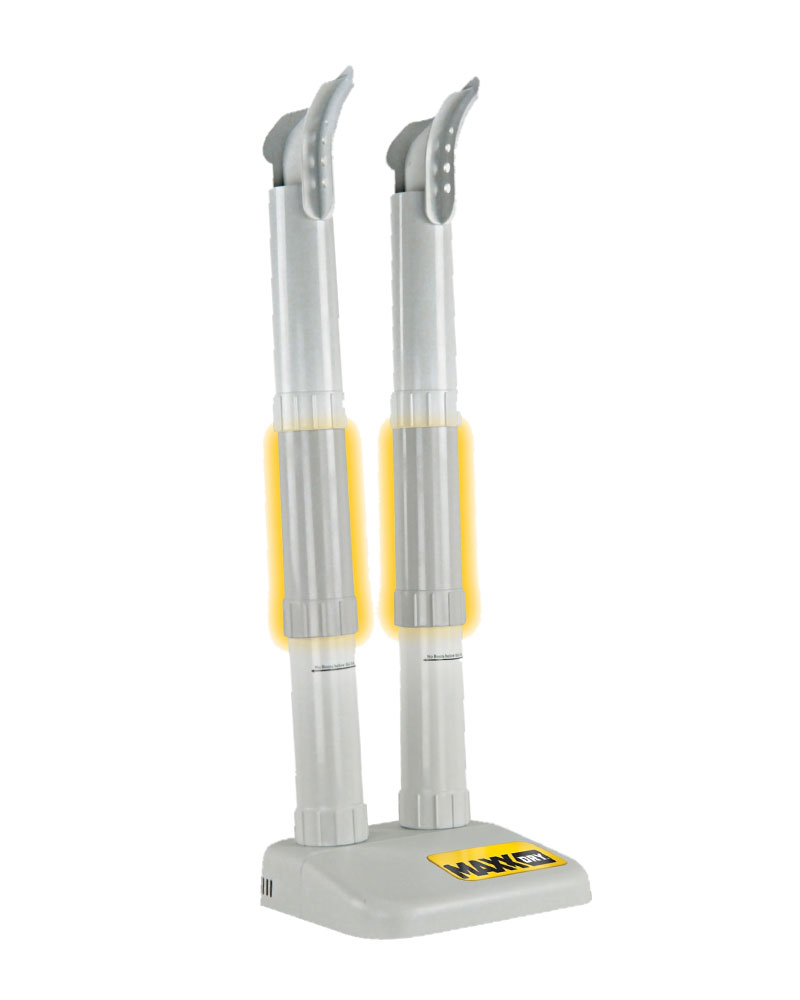
TOTAL RANKING
OVERALL GRADE
A capable mid-tier forced-air dryer from a brand that appears to be quietly stepping back from the category.
Solid forced-air performance: The Heavy Duty dries boots and
gloves quickly and includes extension tubes for taller footwear.
Decent value in the speed tier: Typically priced below DryGuy's
flagship for comparable core performance.
The brand itself is in retreat: MaxxDry's own website now
states that all product links "temporarily link to our Amazon Store." A
brand that has stopped selling its own product directly raises fair
questions about long-term parts, support, and warranty service.
Same blast-heat compromises as the other forced-air units:
Blower noise and unregulated-feeling heat delivery, with no freshness
technology.
Dated design: No modes, no UV, and an interface that has not
changed in years.
There is nothing wrong with the Heavy Duty that isn't also wrong with the forced-air category as a whole, and one thing wrong that is unique to it: the brand's visible retreat from direct sales. It misses Pillar 3 like the rest of the legacy field and adds a support question mark on top. Worth considering only at a meaningful discount.
After weeks of soaked boots, wet gloves, and one memorable bag of hockey gear, the field sorted itself cleanly.
The legacy brands each solved one third of the problem. PEET solved reliability and stopped. DryGuy solved speed and stopped. JobSite solved price and stopped. Every one of them leaves you choosing which failure you can live with: the overnight wait, the blower noise, or the flimsy build. And not one of them does anything about freshness beyond the drying itself.
The Lumivyx DryCore 360 is the only dryer we tested that clears all three pillars at once: deep 360-degree drying with four modes and a smart timer, fixed 118.4°F leather-safe heat that answers the damage question before you ask it, and built-in UV freshness assist that helps reduce the odor-causing bacteria every other machine ignores. At $69.99 with free shipping and a 30-day money-back guarantee, it is priced below PEET's fan model and DryGuy's flagship while doing the job of a dryer and a UV freshener combined.
One practical note: this is a category with brutal seasonality. Boot dryer demand roughly sextuples in December, and newer brands sell through fastest. If your boots are already damp by the door, the time to fix your mornings is before the first real cold snap, not after.